• About
    • Contact
    • Press
    • Sponsor
  • DIY
    • Home & Garden
    • Jewellery & Accessories
    • Yarn Crafts
  • Sewing
    • patternless & self drafted
    • Refashions
    • Commercial Patterns
    • Sewing Tips
    • Overlockers
  • The Refashioners

Portia Lawrie

DIY, how to, overlocker, overlockers, serger, Sewing, Tips and Tricks, Tutorials

Top Tip: Transfer thread from large cones to small spools

01/06/16

how to decant thread from an overlocker cone to standard spools (1)

Picture the scene. It was New Years Day. (Happy 2016 everyone!) A rare opportunity over the holidays to duck into Shedquarters and sneak some sewing in. All ready to rock and roll and then……aaargh! Not enough thread spools in the right colour for my overlocker!

I can be a bit blasé about gathering supplies/notions for a project. I’ve developed quite a stash and kinda just assumed I would have enough standard spools in the general vicinity of this colour to cobble together a workable overlock stitch. (‘cos I use this colour all the time! Not! Doh!). But no. I had one cone in the colour I needed. Loads of it. But all on one cone. Hmmmm….how to decant thread from an overlocker cone to standard spools (9)

But as always with me, necessity is the mother of invention. Some of my favourite ideas emerge when I’m facing a (probably self imposed) hurdle and am scratching my head trying to figure out a work around. Plus, since this little solution means you need only buy one cone of overlocker thread (in that obscure colour that you need but will never use up in a million years) this one saves money and what better way to start off a cash strapped January than with a money saving hack right?how to decant thread from an overlocker cone to standard spools (2)

If you’re like me and hold on to empty thread spools because they are “bound to come in handy for something” at some point; then this would be the moment you are vindicated in your hoardiness! You’ll need 4 empty thread spools (These guttermann ones are particulary perfect as explained in a moment). Some double sided sticky tape. A spare bobbin from your sewing machine. how to decant thread from an overlocker cone to standard spools (3)

Stick a piece of the tape on the flat end of the thread spool….

Remove the backing and firmly press your empty bobbin on top,,,how to decant thread from an overlocker cone to standard spools (4)

how to decant thread from an overlocker cone to standard spools (5)

Pop the thread cone in a mug/cup in front of your standard sewing machine.  We are essentially going to treat the empty spool as a bobbin. Which is why I said these particular thread spools are quite useful. On the opposite end of the spool to where you stuck the bobbin, there are holes that you can use in the same way as the hole you would normally use in the top of the bobbin. Pop your thread through one of those holes just as you would on a bobbin…how to decant thread from an overlocker cone to standard spools (6)

Then attach the whole assembly to the bobbin winder on your standard machine just as if you were going to wind a normal bobbin…how to decant thread from an overlocker cone to standard spools (7)

Then start winding! Hold the thread at slight tension with your hands and feed it onto the thread spool in an even manner by gently moving the thread up and down as it winds so that it distributes along the full length of the spool in an even manner. how to decant thread from an overlocker cone to standard spools

And that’s that! Repeat for all the other spools, using the same bobbin. It’s removable because you only used double sided tape. But you may not want to use it in your sewing machine after due to a sticky residue. So I’ve just set mine aside and reserved it for this purpose; because I am so going to want to do this again at some point!how to decant thread from an overlocker cone to standard spools

There are other methods out there for doing this but this one suits me because it’s simple, quick and straightforward. The main morals of this story?

  • Don’t throw away empty spools!
  • Standard spools do work on an overlocker
  • If you HAVE to buy a overlocker thread in an obscure colour that you’ll only use once…just buy ONE and do this!
DIY, how to, refashioning, Restyles, Sewing, Thrifting, Tutorials, Uncategorized

Refashion: Contrast Texture Sweatshirt

12/18/15

This sweatshirt has been sitting in my refashion pile for several weeks. I have a preference for raglan sleeve sweatshirts as I find the fit more flattering. But this sweatshirt was so soft I nabbed it from the charity shop anyway. What’s more the underside of the fabric was really interesting to me (loopy terry texture and a pinkier colour than the right side) and even as I was lifting it off the rack in the shop, I knew I wanted to play with contrasting the wrong side of the fabric with the right side…sweatshirt refashion (1)

Whilst I am not overly sold on the final fit of this garment, I am in love with the contrast elements of it. I think it’s a really effective way of adding some interest to a plain sweatshirt and has applications for both refashioning and “from scratch” dressmaking. I’m sure it’s not just me that looks at the “wrong” side of the fabric and thinks….well that’s just as interesting as the intended right side. In fact I often spend time deciding which side of the fabric I prefer and want to use. The answer could be…..use both sides!sweatshirt refashion - contrast texture detail

The sleeves were a simple case of removing the ribbing cuffs and creating a turn up to display the underside of the fabric.

The triangular panels are also pretty simple. I did wing this a bit as it was an experiment. So there’s a couple of areas where I’ll tell you what I should have done to make things easier. But hey, the outcome is pretty much the same!sweatshirt refashion (14)

I began by opening the whole thing out. I knew I was going to need to reshape it at the side seams anyway. So began by cutting it open along the side seams and underarm seams…from the hem all the way to the cuff. Both Sides.

In this pic the whole thing is opened out (like a big cross) and then folded along the length, lining up sleeves and side seams so it lays flat and I could deal with the front and back of the sweatshirt separately. This is the front. I marked out and cut a wedge from the side. From the underarm to the hem. Cutting through both layers at once…sweatshirt refashion (15)

With hindsight, I’d actually advise removing the hem and any other bulkiness like it (I had those bulky hem vents) before marking and cutting the wedge. And actually I would measure and mark each side separately rather than cutting through two layers at once. The bulk of those seams and the double layers of thick sweatshirt fabric skewed my scissors resulting in slightly “non-identical” wedges. We need them to be identical for the next step.

Flip those wedges over and apply them to the opposite side of the sweatshirt (with a scant seam allowance) from which they were cut. Essentially reconstructing the shape of the sweatshirt. But now you have those contrasting wedges either side! sweatshirt refashion (16)

Press SA towards centre and top stitch.

Then repeat that process on the back…sweatshirt refashion (17)

…and reconstruct the sweatshirt by placing RS together and sewing together from cuff to hem on both sides…

I wanted to continue the “contrast triangle” element onto the neckline and swap out the ribbed triangle …sweatshirt refashion (3)

Plus I prefer a slightly deconstructed look as opposed to a thick band of ribbing…19

Pretty simple to do this using reverse applique.

First of all I made a snip up to the stitching line on the neckline ribbing…sweatshirt refashion (4)

sweatshirt refashion (5)

…and cut that ribbing away right next to the stitching line.

I’d shortened the sweatshirt at this stage so had some scraps left over…sweatshirt refashion (6)

I cut a square large enough to cover the triangle detail I was looking to reverse applique…

…and pinned it behind the triangle with the textured side facing outward…sweatshirt refashion (7)

Make sure it is smooth and flat.

Over at the sewing machine, line up your needle with the existing top stitching around the outside of the triangle…sweatshirt refashion (8)

sweatshirt refashion (9)

Then stitch right on top of that line of stitching to secure the new scrap of fabric in place…

This is how it looks on the reverse….sweatshirt refashion (10)

sweatshirt refashion (11)

Trim away the excess on the inside close to the line of stitching.

On the outside…make a snip into the “old” ribbed fabric that you want to remove being careful not to cut the new fabric behind!sweatshirt refashion (12)

sweatshirt refashion (13)

Then with small sharp scissors cut away the old ribbed fabric close to the stitching, to reveal the new fabric behind!

Hem…and that’s that!sweatshirt refashion (2)

I’m planning on revisiting this concept with my preferred raglan sleeve sweatshirt shape as I don’t feel 100% comfy in this shape. As I said, the fit part of this I’m not entirely content with. The contrast element concept though??sweatshirt refashion - contrast texture detail

Well, I think I should call that part a win don’t you??

DIY, how to, Knitting, Tutorials, Uncategorized, yarn crafts

DIY: Moss Stitch Infinity Scarf

12/14/15

My knitting “career” is littered with unfinished projects. I don’t think my attention span lends itself to long term projects. I know how to knit. But projects that involve alot of concentration, counting and keeping track are destined to fail in my hands. Period.

DIY MOSS STITCH INFINITY SCARF

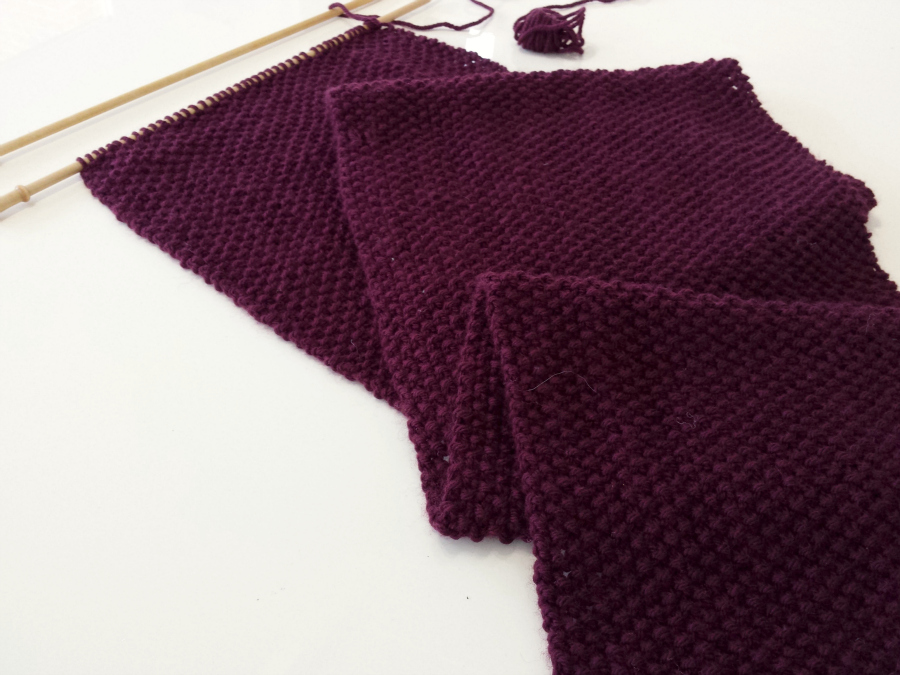
So this simple infinity scarf in moss stitch was the perfect project for me. I was finally kicked into action when I saw Tamsin’s gorgeous scarf. She used the Gaptastic Cowl pattern; but this one was just done on the fly by counting and measuring. The completion of this marks my first EVER wearable knitted project! It’s as simple as knitting a super long rectangle (it’s knitted flat rather than on circulars) then joining the  two ends with a simple slip stitch. The moss stitch is super easy and provides a gorgeous texture and ANYONE that can cast on, knit and purl can make this scarf. All in it took me about 5 nights in front of the telly to complete. I really enjoy the repetition and mundanity of moss stitch. It’s like chewing gum for the brain if that makes sense. Very little concentration required and after a while it just becomes a “muscle memory” type thing. A stitch you can do without thinking, whilst binge watching a box set on Netflix 😉

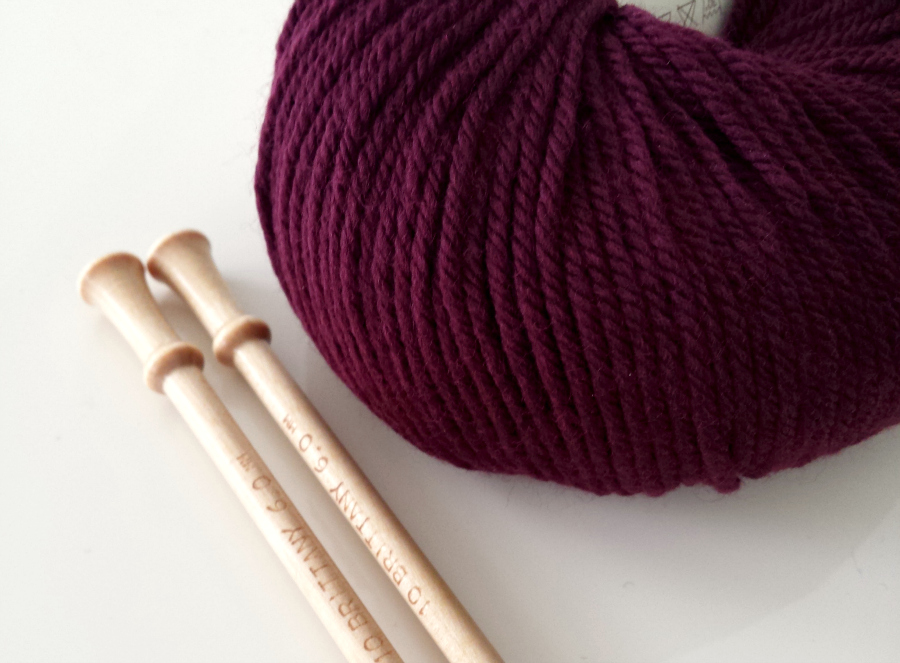
The yarn is Debbie Bliss Cashmerino Aran weight yarn in plum. Super difficult to get a consistent colour representation in the images, I’m sorry! The image above is the closest to the actual colour (if a teeny bit more purpley). Really soft and easy to knit with and this make took 4 x 50g balls. Massive array of colours.DIY MOSS STITCH INFINITY SCARF

The gauge calls for 5mm needles. I wanted a slightly looser/drapier texture so opted for 6mm. These Brittany birchwood needles are so lush to knit with I have to say. I scored them in a charity shop a couple of years back for, like, £1 or something silly! (Charity shops are great places to stock up on knitting needles and crochet hooks ). These are a bit spesh though. They feel wonderful in the hands and stitches just slide along them. £1 well spent!

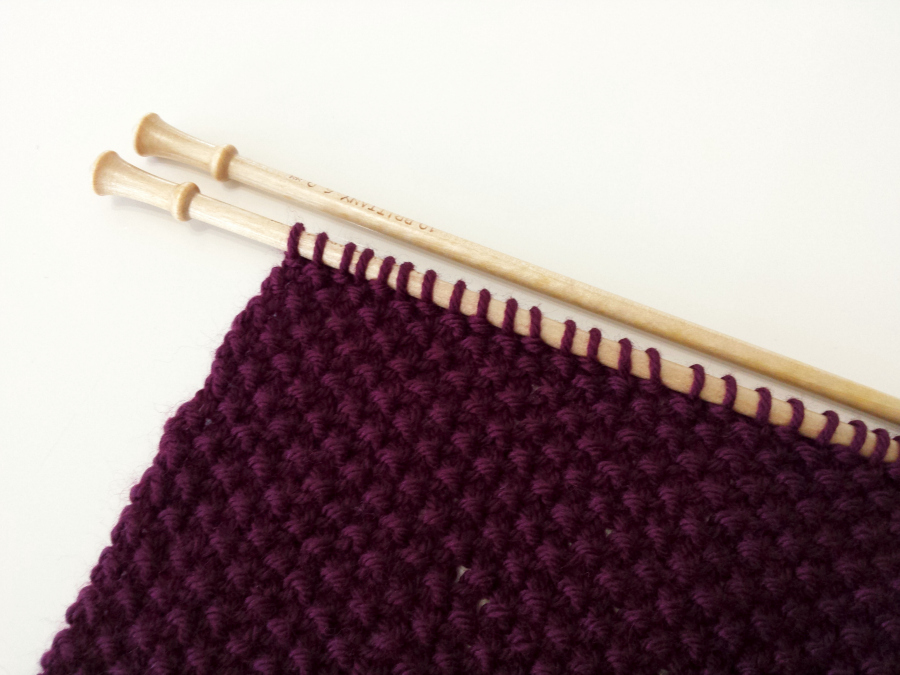
So…onto the deets. I’ll start by saying this is NOT a knitting pattern per se. I’ve written this so that anyone not familiar with pattern terminology can easily follow it and get the gist. And I don’t want anyone thinking I’m some kind of knitting guru because I am SO not. BUT, I did want to share this because I hear people say so often, that they can’t knit. Seriously, you can knit this. Start by casting on an odd number of stitches. The reason it’s on odd number is that it keeps it simple when knitting each row. Each row is exactly the same. Nothing to remember when you turn your work. Every row starts and ends with a knit stitch. Simple! Great video here for casting on.

DIY MOSS STITCH INFINITY SCARF

I cast on 43 stitches. This gave me a width of about 11″ for my finished scarf in this yarn; which works well for doubling over the scarf when wearing. If you want it wider, cast on a few more stitches. Narrower, cast on a few less. If you’re using a different weight of yarn, simply cast on until the row of stitches on your needles measures the desired width of your finished scarf. Just make sure it’s an odd number.

But let’s work on the basis of this scarf and this yarn for now. Seriously simple. Moss stitch is a beautiful stitch that alternates knit and purl stitches. (K1, P1, K1,P1 etc) Great video for knit here and purl here. This scarf is knit as follows:

  • Cast on 43 stitches
  • Knit the first stitch
  • Bring the yarn between the needles so it’s at the front
  • Purl the next stitch
  • Bring the yarn between the needles so it’s at the back
  • Knit the next stitch
  • Repeat that process to end of row
  • Every row identical

DIY MOSS STITCH INFINITY SCARF


Keep going until the whole piece measures approx 50-54″ (Make sure you have a small ball of yarn left for finishing) then cast off and join the two ends together with a slip stitch. Weave in ends and you’re done!!

If you’re like me and you’ve never finished a knitting project before…this could just be it! And a great handmade gift too :

DIY, gift ideas, how to, Tutorials, Uncategorized

DIY: Message Mugs

12/09/15

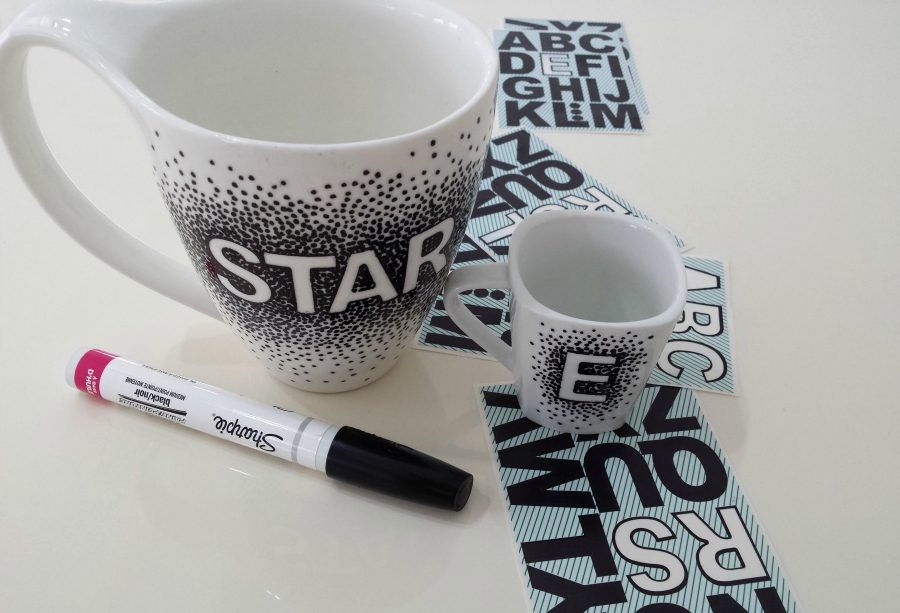
You can never have too many mugs. Especially when you drink as much coffee as we do in this house! Here’s a cute and simple way to personalise a plain mug as a last minute gift!diy sharpie message mug

These would be great wrapped in clear cellophane and filled with treats like fudge, marshmallow and such for gift giving.

diy sharpie message mug

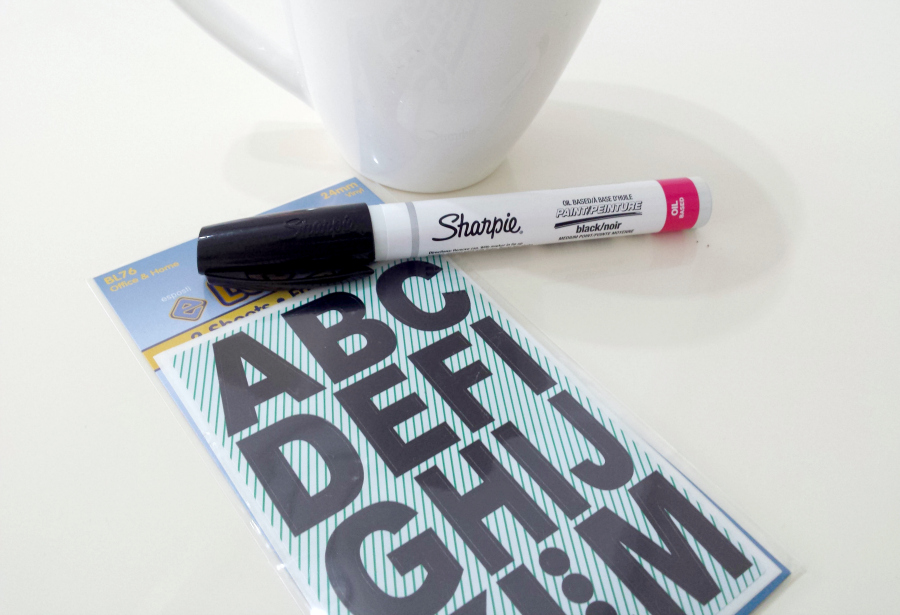
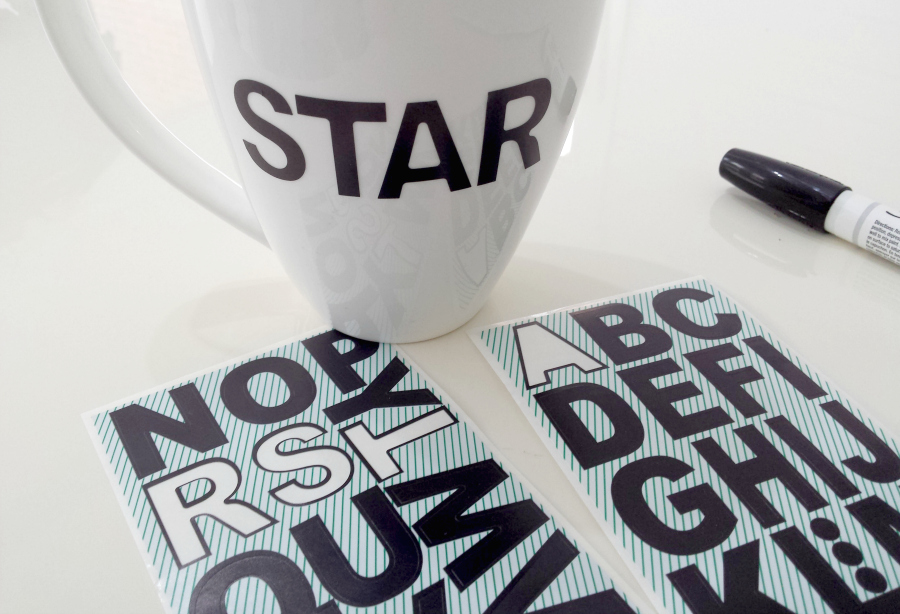
You’ll need a plain mug. (The cheaper the better in this instance as the glaze will likely be less resistant when you come to heat it) Some vinyl stickers (letters, shapes, whatever you want. But vinyl…NOT paper as the ink will bleed through paper) and an oil based sharpie or a ceramic pen. Categorically, do not use a normal sharpie pen as they are water based and the marks will start to come off as soon as you wash it. If you follow me on IG you might remember a version of this pop up on my feed almost a year ago. It didn’t make it onto the blog because I used a normal sharpie and it DID NOT WORK. Learn from my mistakes people…learn from my mistakes 😉

diy sharpie message mug

Make sure your mug is clean and dry before you start. Clean the surface with white spirit/rubbing alcohol/nail polish remover to remove any residual grease before you start. Use the stickers to spell out your message taking care to keep the letters evenly spaced and level AND making sure they are firmly smoothed down all over but especially at the edges.

diy sharpie message mug

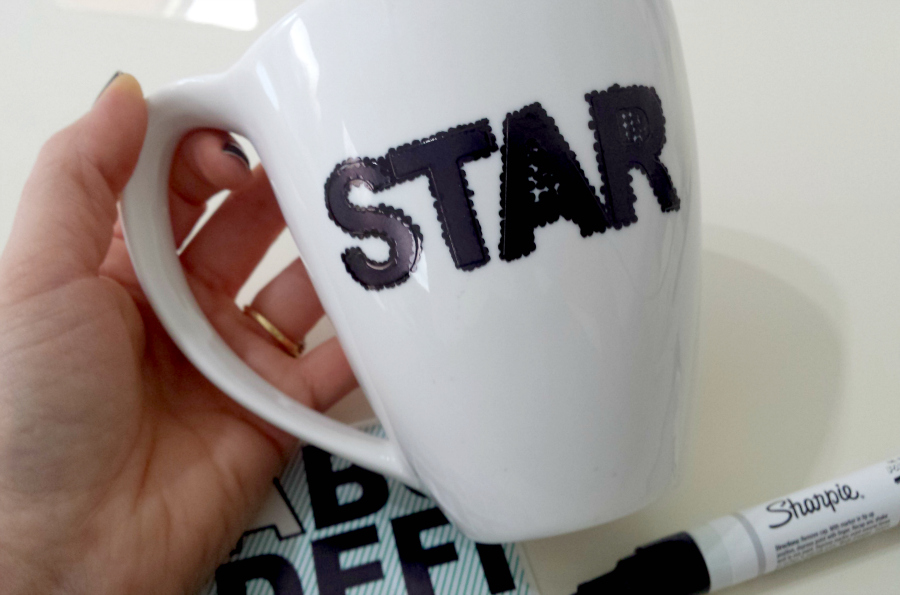
Take your pen and overlap “polka dots” all the way around the outline of the letters including any spaces inside the letters. Don’t overload the nib of the pen at this stage as it may lead to some of the paint seeping under the edge of the stickers and we want a nice clean edge.

diy sharpie message mug

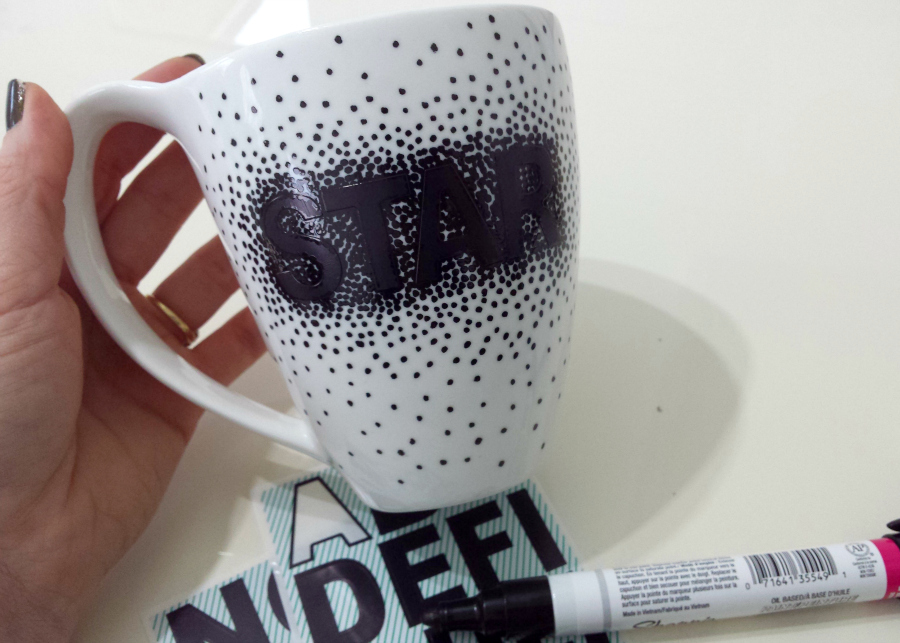
Then fill in the area all around and inbetween the letters with more dots. Keep the dots dense in and around the letters then as you work outwards from the letters, have the dots become less dense and further apart.

diy sharpie message mug

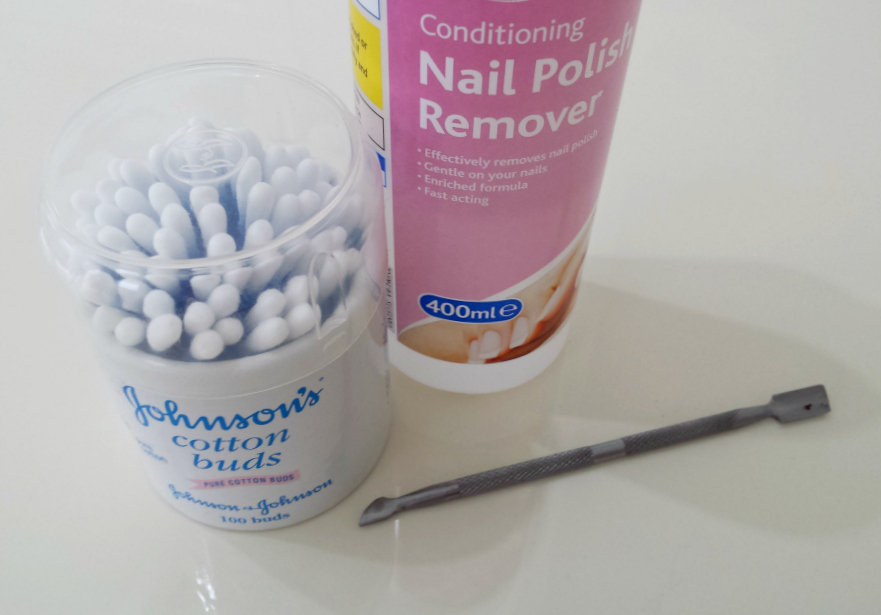
Allow to dry. I left mine for at least an hour; before carefully removing the stickers. Use nail polish remover, cotton buds and a small scraping tool of some kind to clean up any ink that has “bled” under the stitckers. There shouldn’t be much if you firmed the edges down and didn’t overload the paint.

diy sharpie message mug

Once the stickers were removed I then went back and added more dots to even out the graduated effect. Elliott decided he wanted one too! So I grabbed a little espresso cup and monogrammed it for him, lol!  Et voila! Leave to “cure” for a day or so then bake in the oven. For a sharpie one place the mug in the oven then heat up to 220 celsius. Bake for 30-45 mins. Switch the oven off and allow to cool completely before removing from the oven. If you use a ceramic pen, follow the manufacturers instructions for setting/fixing the paint. For both pens the finished mugs will be handwash only for best durability.

diy sharpie message mug

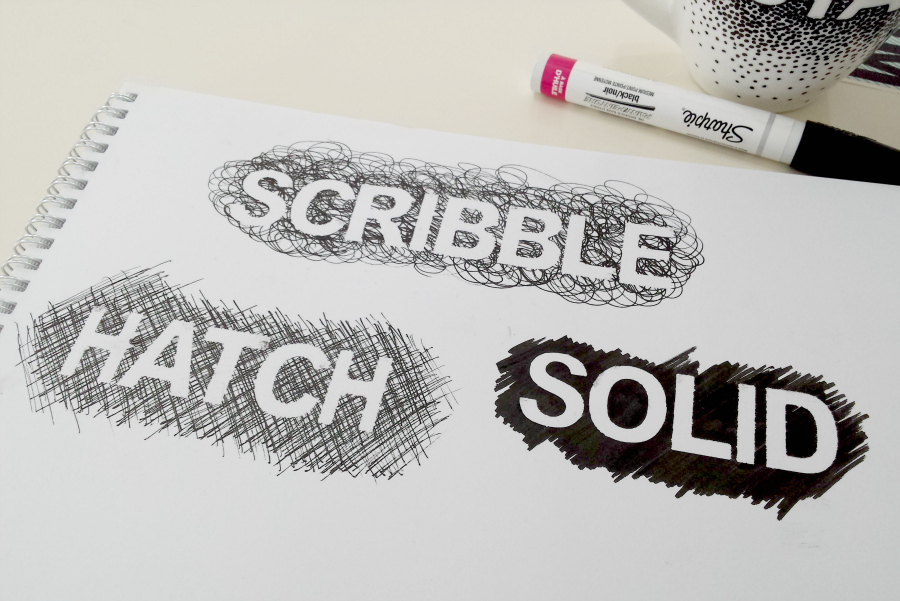
I played around with some alternative marking techniques. I quite like them all! May have to make some more!!

DIY, how to, Sewing, Tutorials

FO: DIY Harem Pants (Drop Crotch Trousers)

12/07/15

An area of garment sewing that I haven’t massively explored is trousers. Like alot of people I find the potentially complex fitting and pattern adjustments involved a little off putting. (It’s probably one of those situations where the reality is nowhere near as bad as the anticipation of it!) I HAVE been sewing up some trousers on the quiet in Shedquarters in a bid to start cutting my teeth on trouser sewing AND develop a self drafted pattern for my ideal pair of trousers. Apart from my beloved skinnies (I have no intention at this stage to venture into jeans sewing!) my preferred trouser silhouette is slouchy and comfy…DIY HAREM PANTS

These drop crotch trousers (harem pants, “hammer” pants, call them what you will!) have been in constant rotation since I made them.  They’re a reincarnation of a jersey pair I made a couple of years ago to test the idea out. That pair has been in constant use ever since but since they were a test pair I didn’t take the time to achieve a decent finish (and the jersey attracts every last bit of fluff in a 5 mile radius) so I tend to wear them around the house; and I’ve been wanting to revisit the idea and make a more “grown up pair” suitable for being out in public (!) for a couple of years now! (These are made from a lovely black crepe from Dragonfly Fabrics. Get 15% off with code “DRESSMAKING” at checkout).

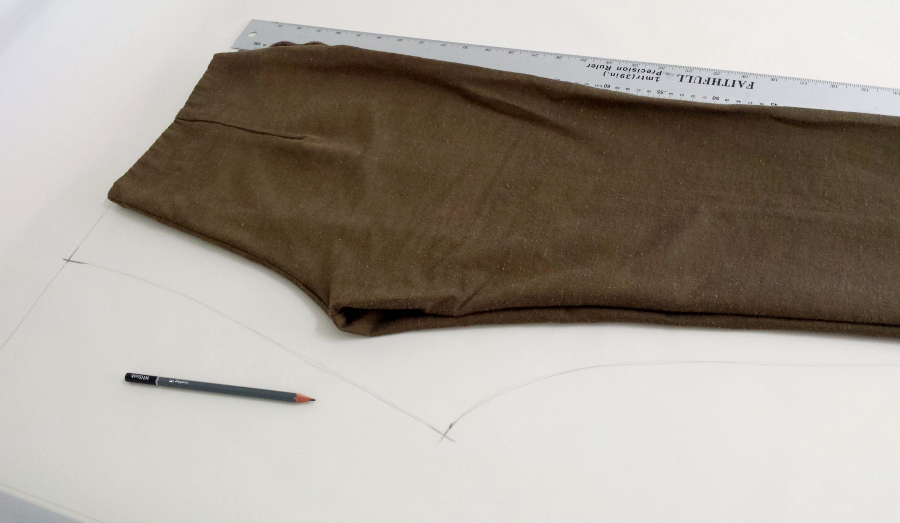
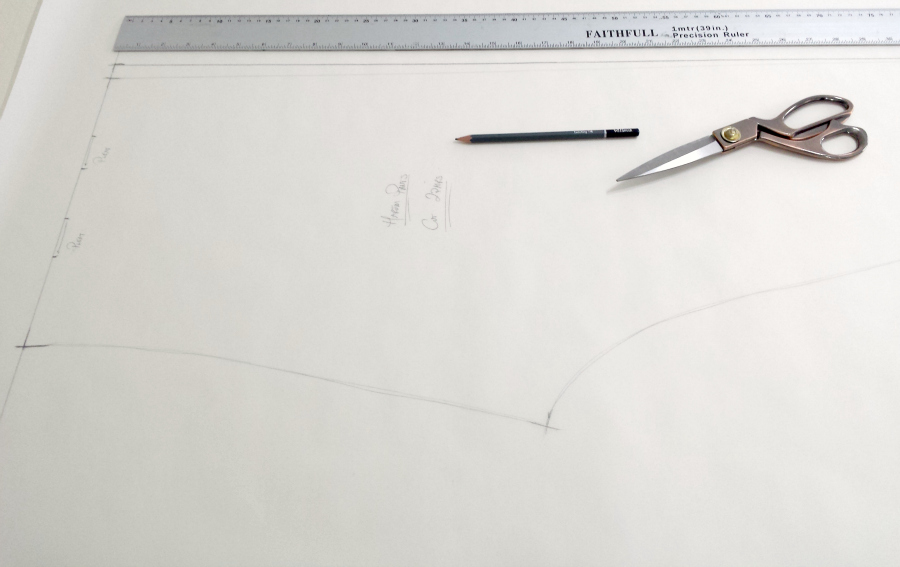
One of the awesome things about these trousers is they don’t require any traditional fitting as dropping the crotch kinda makes it redundant in terms of fitting to the body. Drafting a pattern for your own is a pretty easy undertaking too. I simply used a pair of existing trousers as a template. I made the waist wider as I wanted to incorporate some pleating and give some drape…DIY HAREM PANTS

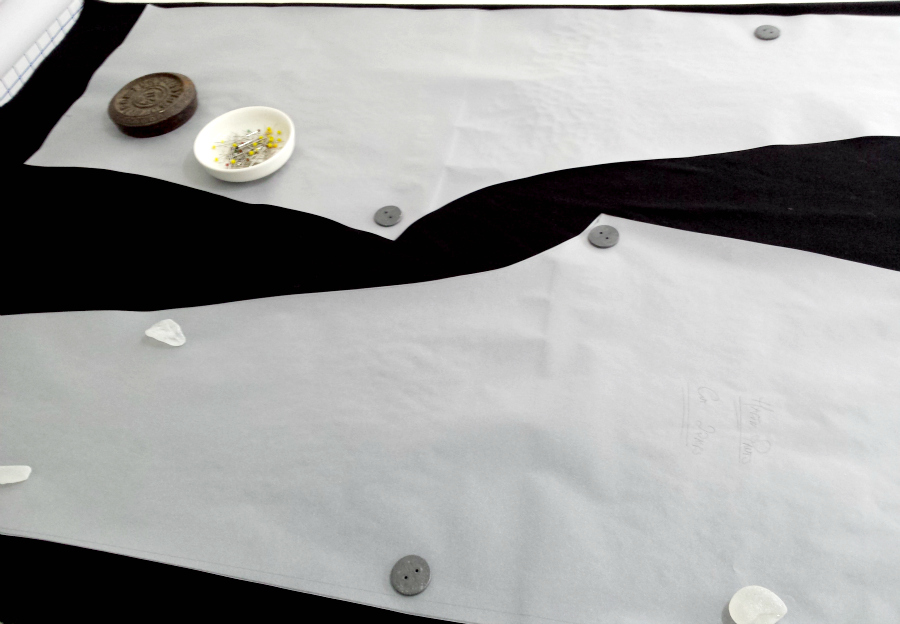
Then I traced the approximate shape of the trouser outline with the exception that the crotch is dropped to 16″ from the waist. The crotch point (is that the term?) is much lower and  deeper. If you’re going to drop the crotch, it has to be wider to allow for the width of your stride when you walk. The lower you drop the crotch, the wider the crotch will have to be to allow for your stride (does that make sense? If you stand in a pretend walking position then consider the distance between your legs. They’ll be further apart at the ankle than they are at the thighs. That distance has to be factored in when you decide on your crotch width)

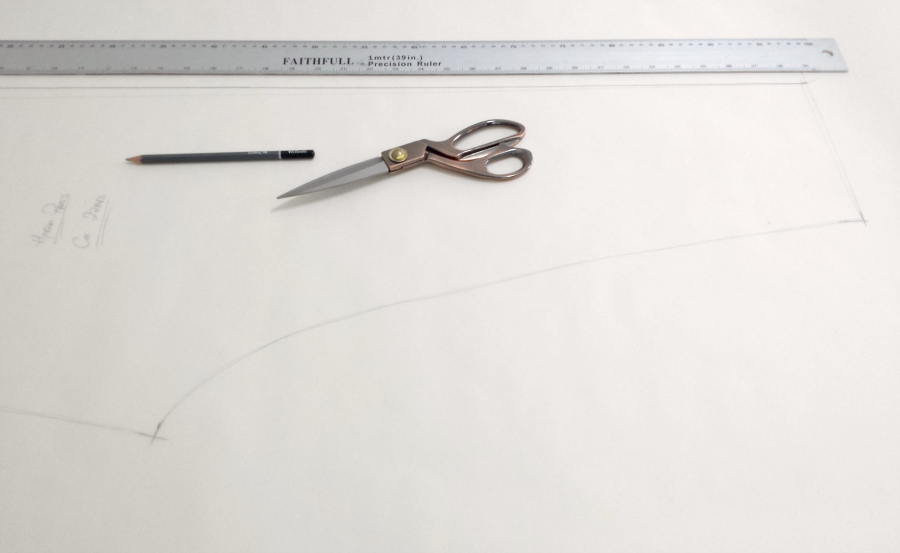
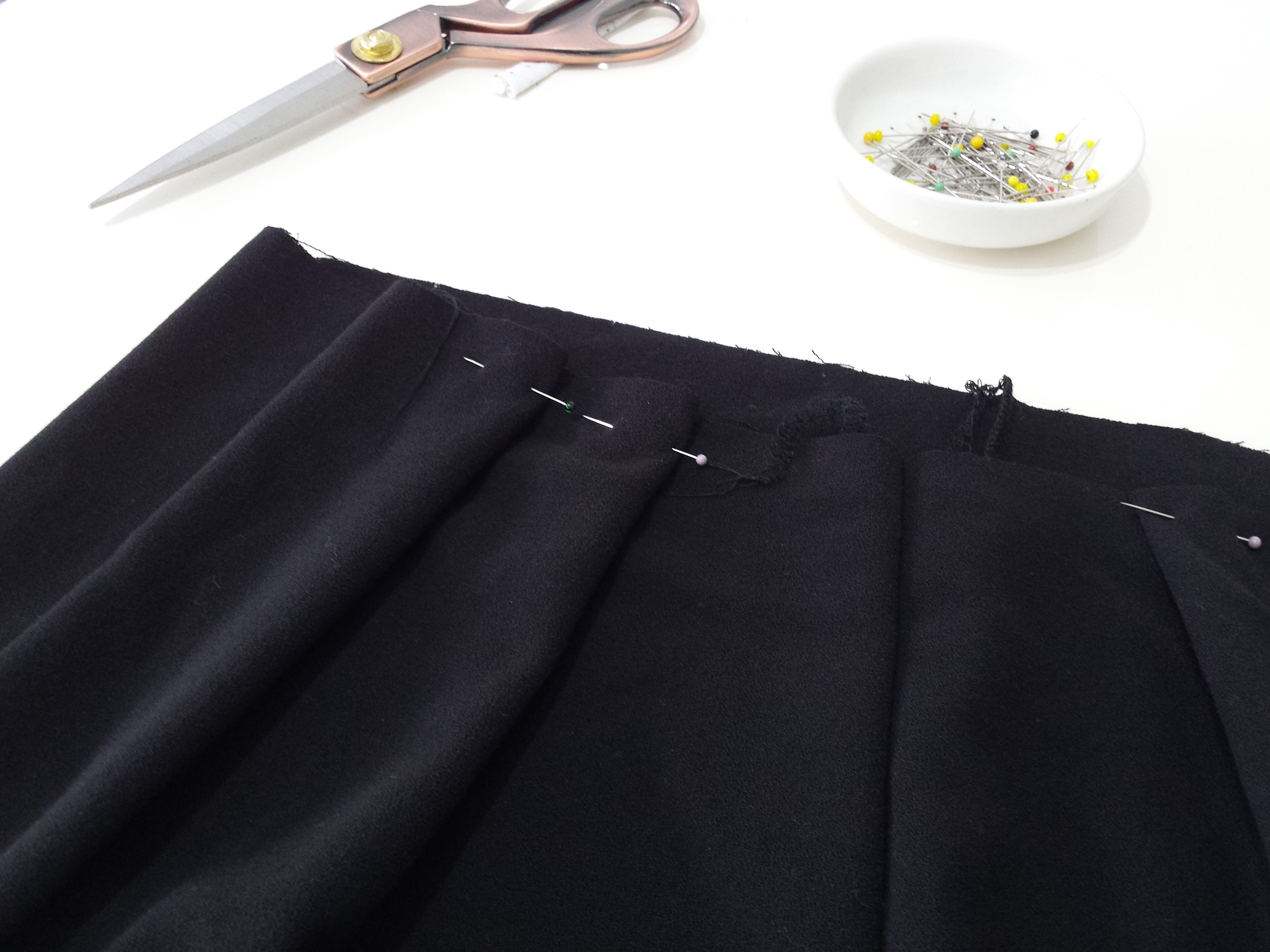
I subtracted my waist measurement from the final width of the pattern piece and marked in pleats to take up the excess…DIY HAREM PANTS

Then narrowed to the ankle taking account of the measurements around my knees, calves and ankles. The whole thing was drafted to include SA as I went. It’s such a loose style that you can get away with it!DIY HAREM PANTS

There is just one pattern piece from which I cut 2 pairs…DIY HAREM PANTS

Construction as follows:

  1. Sew the front and back pieces together at the side seams
  2. Sew the front and back pieces together at the inner leg seam up to the crotch point
  3. Turn one leg the right way out
  4. Place inside the other leg
  5. Line up the crotch seams matching at waist and crotch
  6. Sew the crotch curve all in one go

DIY HAREM PANTS (7)

That’s your basic trouser! Add the pleats and baste those. Then add a simple elasticated waistband (Mine is a simple band of fabric applied to the waist and then folded over, with elastic inserted) and you’re done!

I’ll likely be making more of these and may well do a more detailed tutorial at some stage. I’m afraid light levels & the fact that I chose black for this project made it impossible, with my meagre photography skills, to photograph this one in more detail. But I think you’ll get the gist from this!
Such a super simple and comfy pair of trousers! If you fancy cutting your teeth on some trouser sewing without the fitting fears…give this a try!!
DIY, how to, repurposing, Tutorials

DIY: Copper & Wool Tassel Key Fob

11/25/15

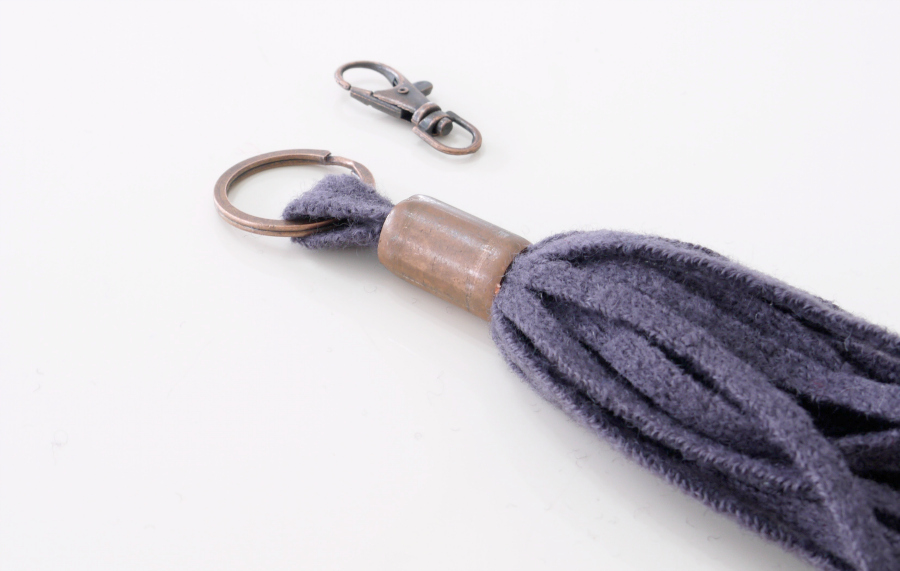
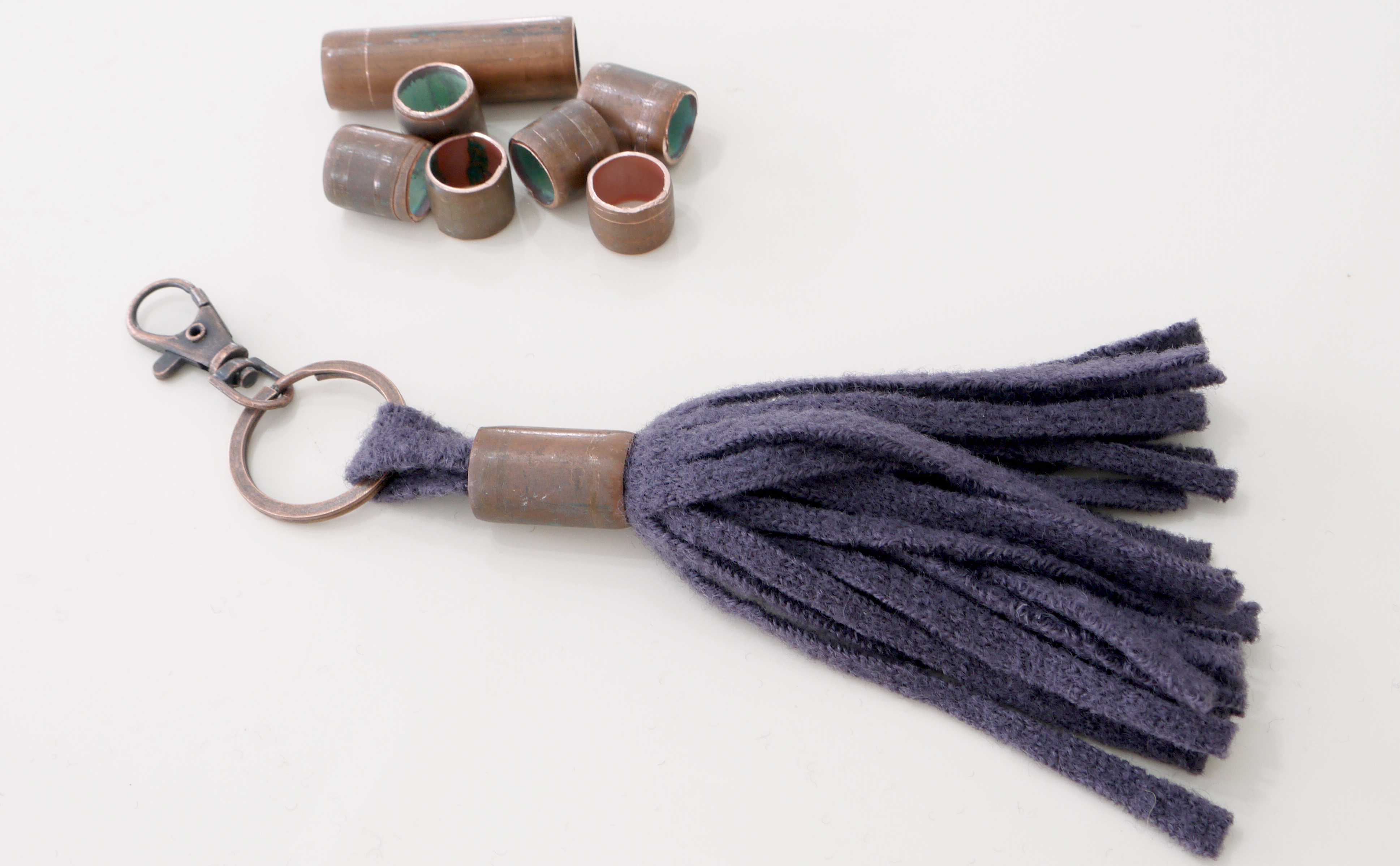
Just a quick and cheeky little diy for you this morning. I’ve been playing alot recently with more crafting related projects having just recovered my crafting/jewelry toolkit from storage. This rather tactile keyfob combines the textures and tones of copper and boiled wool. Still needs a bit of refinement I think….but I thought you’d enjoy it anyway as the contrast of materials really works I think!copper and wool tassel keyring

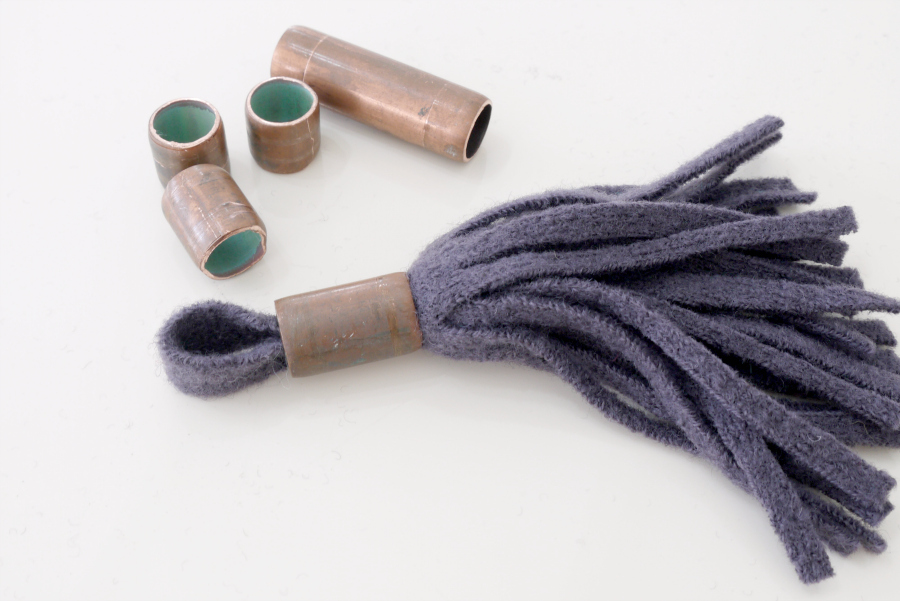
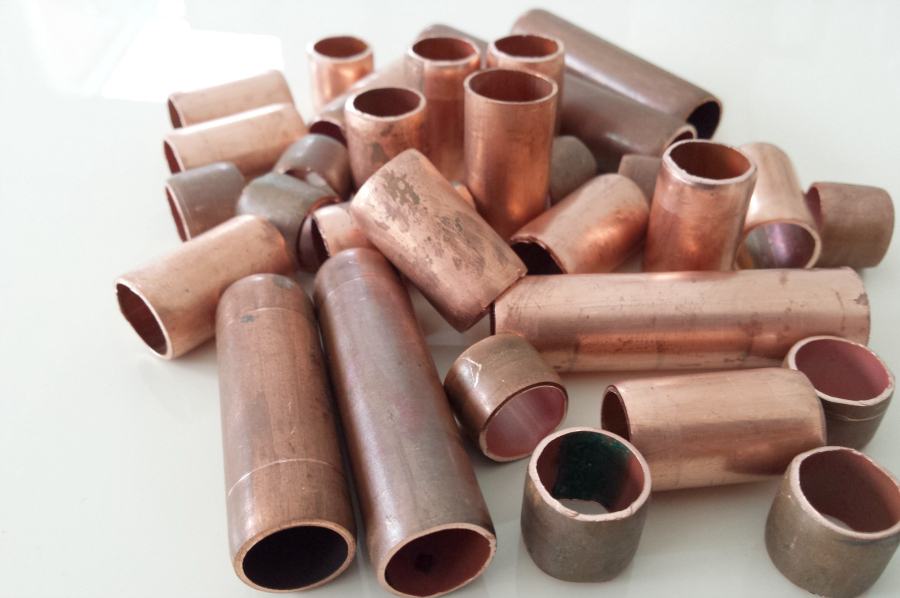
This is standard 15mm copper plumbing pipe. Just some offcuts that someone on our local feecycle style facebook group kindly gave me to have a play with. I’m getting slightly obsessed with metal tubing and piping; and repurposing hardware supplies into something  prettier. (You may recall my necklace and pendant from last week!) Pinterest as usual is full of inspiration…copper and wool tassel keyring

The tassel part utilises some boiled wool swatches that I got from Dragonfly Fabrics a couple of years back when I was deciding on fabric for my Freemantle coat. Yes they were only swatches (measuring about 6″ x 4″) but they really were too delicious to discard. So they’ve sat in my stash for aaaaages.

copper and wool tassel keyring

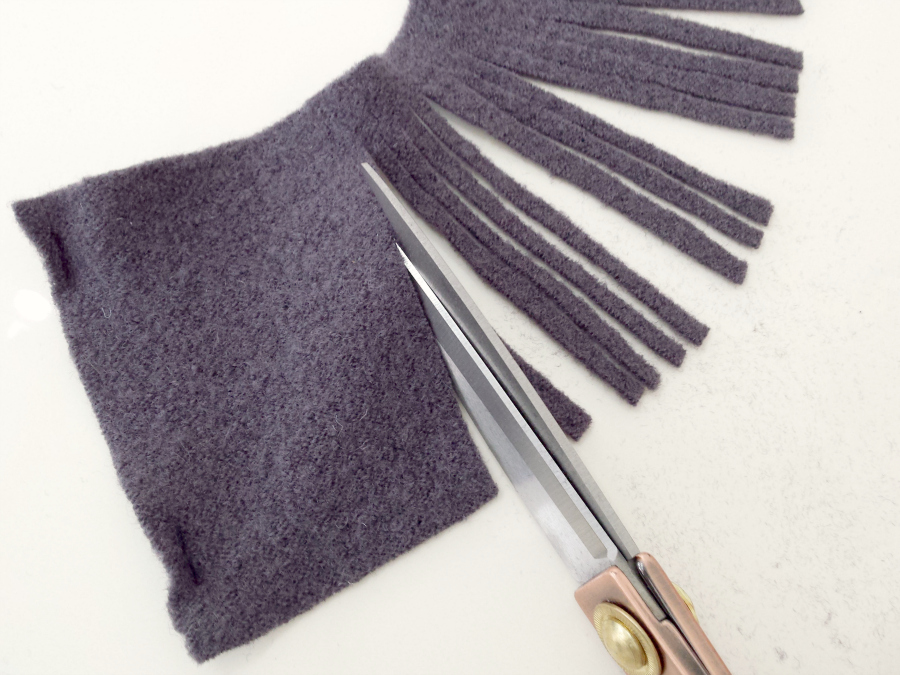
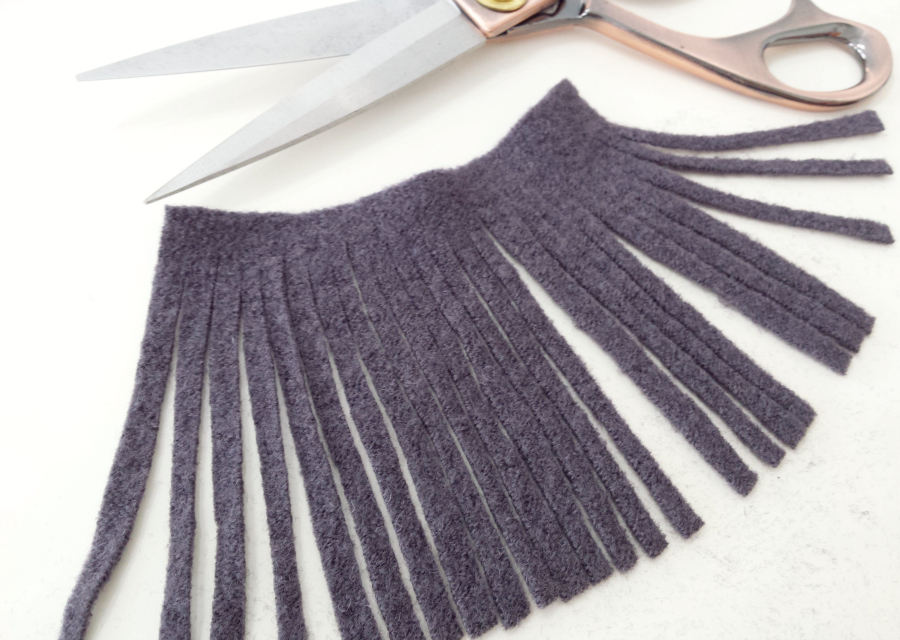
Not in the least bit complicated as you can probably work out! Cut the wool piece into narrow strips, creating a fringe and leaving the top 1/2″ uncut. The beauty of boiled wool of course is that it doesn’t fray. So it’s perfect for creating no fuss  fringing. You can see in the picture above, on the left of the fabric piece, there are some staple marks where the swatches were stapled to card. I removed a 1cm wide strip from the left edge to remove that. But set it aside…

copper and wool tassel keyring

copper and wool tassel keyring

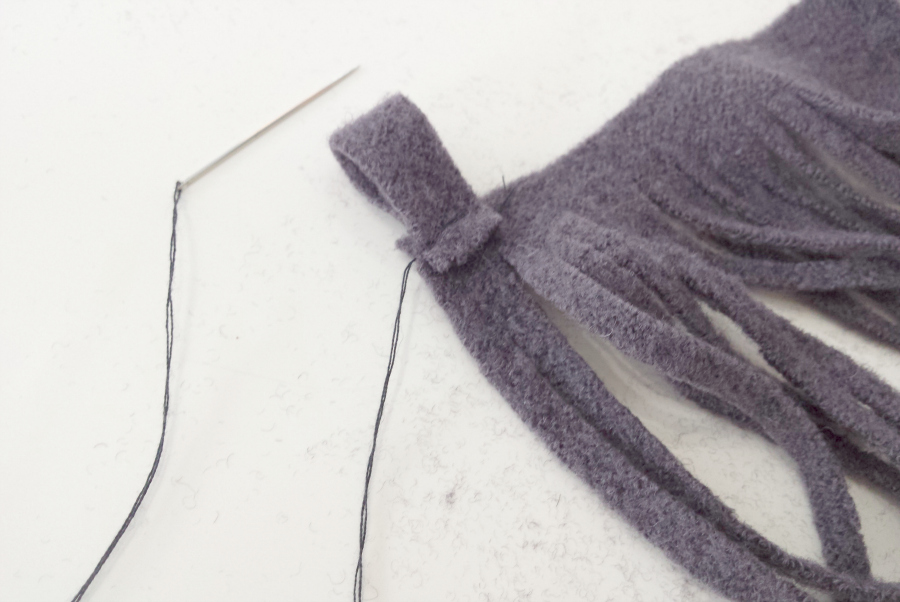
…and used a section of it to make a loop that is stitched to the top corner…

copper and wool tassel keyring

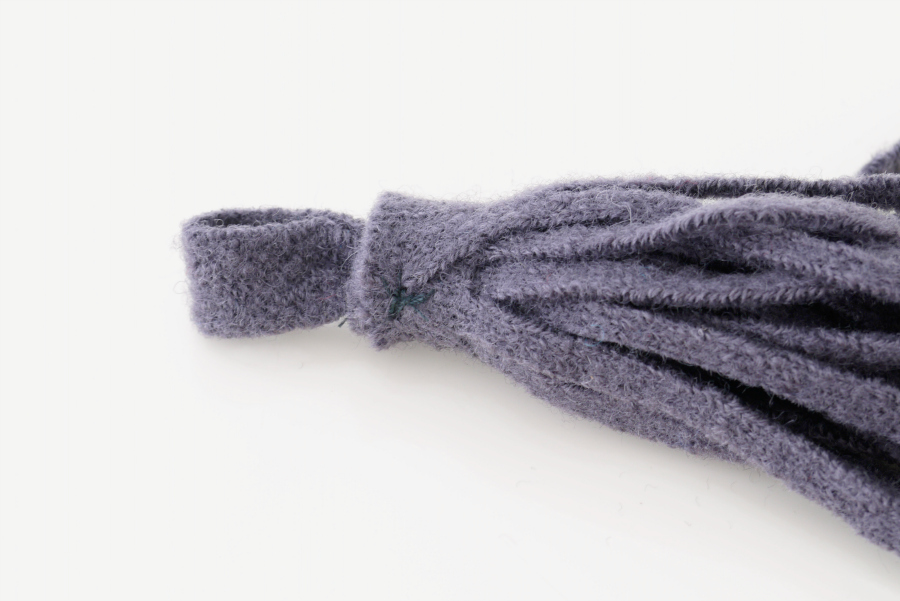
Roll it all up tightly and stitch to secure. Stitch through the whole neck of the tassel. Boiled wool is like sewing through butter so it’s super easy to pass a needle even through several layers like this…

copper and wool tassel keyring

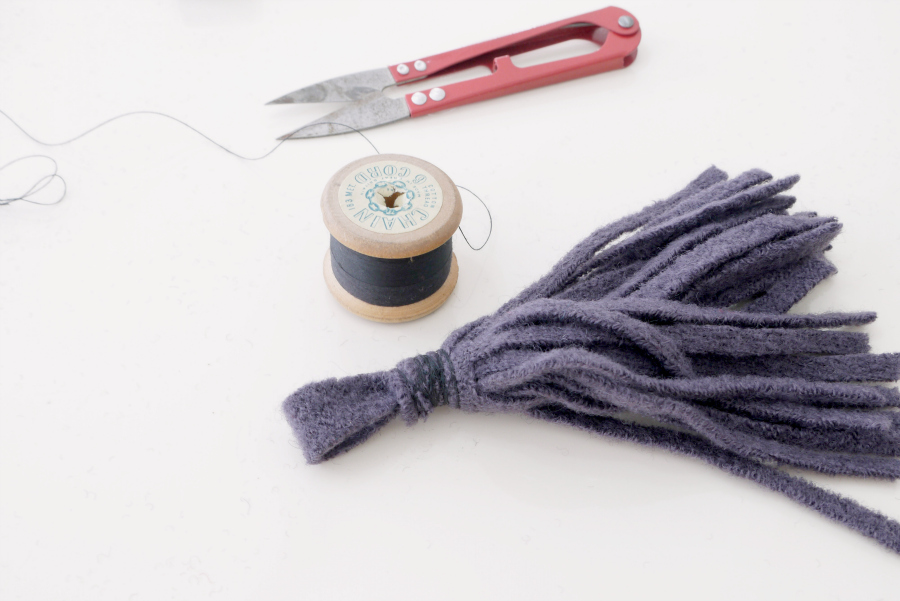
At this point , the neck of my tassel was to wide to sit in my 15mm copper pipe. I simply wrapped it with thread to compress it. Again, this is a cinch with boiled wool as it’s so deliciously squidgy!

copper and wool tassel keyring

Once the neck of the tassel was narrow enough I slid on the piece of copper tube and slid it down until it was a snug fit. Then popped a few drops of superglue into the top of the pipe for a little extra security.

copper and wool tassel keyring

Slide a split ring through the tab; add a lobster clasp…

copper and wool tassel keyring

Done! The resulting keyring is quite lightweight. Not sure it’s up to the rigorous use that my car keys get; being shoved in and out of bags and pockets on a daily basis. (Elliott nicked the really sturdy red leather one I made. Pfff!!!) But it does make the perfect decorative fob for the key that sits in our living room french doors AND this heather shade matches perfectly with our colour palette. It’s a lovely little added touch of luxury and detail to keys that sit permanently in doors, cabinets, drawers and the like.

Don’t forget the giveaway courtesy of Dragonfly fabrics closes on Sunday.

DIY, Freebies, Giveaways, how to, Sewing, Tutorials, Uncategorized

FO: Cable Ponte Coatigan (+ Dragonfly Fabrics Giveaway!)

11/23/15

This is a hack I’ve been wanting to test out for a while. A simple raglan sleeve sweatshirt pattern, to my mind, had potential to be hacked into coatigan. And what do you know…RAGLAN SLEEVE COATIGAN

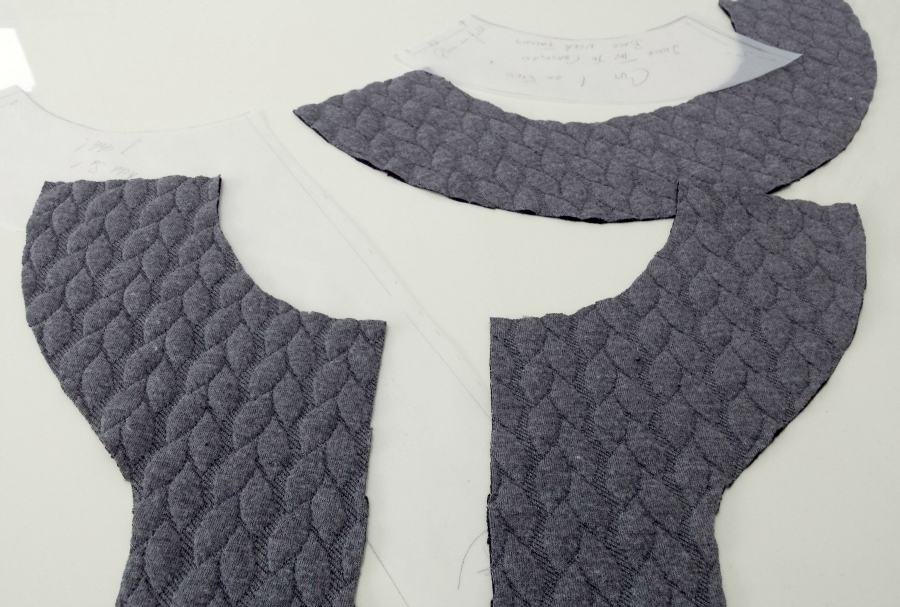
I’d been eyeing this cable knit jacquard ponte from Dragonfly Fabrics. When it arrived I wasn’t disappointed. Yes it is as soft, squishy and bouncy as it looks. The only unexpected thing for me was the reverse of the fabric wasn’t grey but a black synthetic mesh type affair. The best way I can describe it is a sandwich of layers. I’d been flippy flopping between a skirt, dress or jacket for this fabric. Once I saw the reverse I decided on the coatigan. Because of the warmth of this fabric and the underside, imho, lends itself well to outer garments as opposed to sitting in direct contact with the skin…RAGLAN SLEEVE COATIGAN

To work with…it’s delicious. My serger and standard machined uttered not the slightest resistance. It’s very stable and cuts and sews like a dream. No stretching, wavy seams, curling or skipped stitches. Up the stitch length on your standard machine and use universal or jersey 80/12 needles would be my advice. But the speciality needles are in no way necessary as this fabric isn’t the least bit tempermental

You can use any “loose/easy fit” sweatshirt or raglan sleeve pattern for this hack. The Linden would be a good choice. I happened to have the 2 Hour Top Pattern from Sew Different cut out so that’s what I used.  I simply  lengthened the front and back pieces, and the sleeves; then made up to this stage…RAGLAN SLEEVE COATIGAN

Sliced up the middle…RAGLAN SLEEVE COATIGAN

Drafted a facing for the neckline and opening…RAGLAN SLEEVE COATIGAN

Applied the facing RS together, turned through to the inside, pressed and top stitched down. The sleeve hems were simply turned and stitched. The main hem was finished in combination with the bottom of the facing in the same way as my shirt kimono for The Refashioners.

RAGLAN SLEEVE COATIGAN

This make was very much me testing an idea out. So what I might do differently next time revolves mainly around the neckline. Sometimes when I’m experimenting I get carried away and don’t consider all the elements! For me the neckline is a little wide and a little low (at the back in particular) for this. Don’t get me wrong. It’s fine and I’ve worn it plenty since I made it. It’s just one of those “even better if” kinda things you know? And POCKETS! Why the hell didn’t I put in seam pockets in?? I have a little fabric left so I may go back this week and add on some oversized patch pockets.RAGLAN SLEEVE COATIGAN

In terms of variations, I’m thinking a gold zip right down the front would look ace. Add a hood…make a cropped version…anyway…I digress!

Back to the giveaway.  Simon and Dorte at Dragonfly Fabrics are generously offering the following: First Prize: £25 to spend in their online store. Second Prize: A sewing pattern of your choice from their extensive range. To enter all you need to do is complete a super short survey then leave a comment here to let me know you’ve entered. (It’s really quick, I promise). What’s more, while the giveaway is running there’s 15% off all orders when you use the code DRESSMAKING at checkout. 

Giveaway (and code) expire Sunday 29th November at Midnight GMT. Winners will be selected at random and notified by email.

GIVEAWAY IS NOW CLOSED. Code has been extended to 20th December.

DIY, how to, jewelry, repurposing, Tutorials, Uncategorized

DIY: Pendant from Brass Tube Offcuts

11/16/15

DIY PENDANT FROM BRASS TUBING OFFCUTS

If you thought my rubber and brass tube necklace was simple, this pendant is even more so!

DIY PENDANT FROM BRASS TUBING OFFCUTS

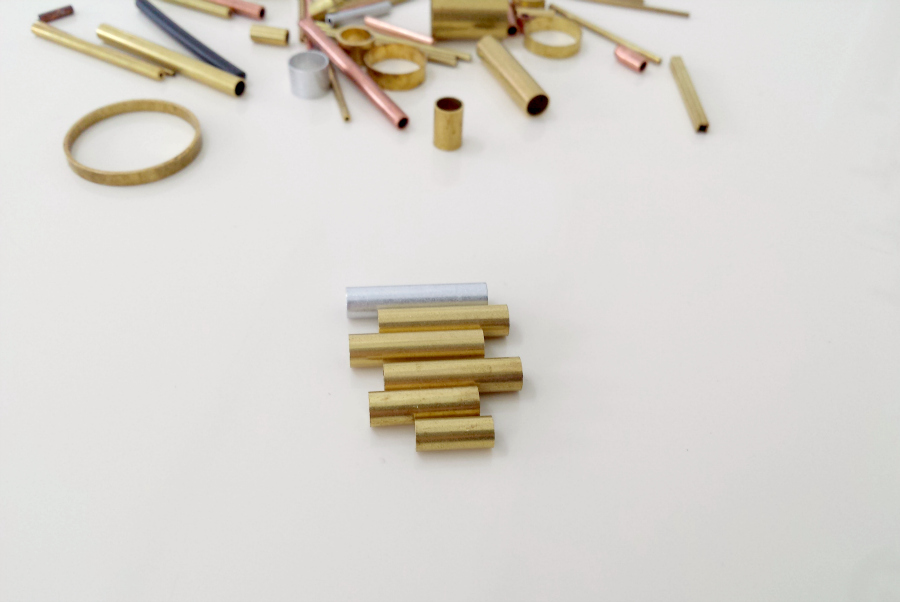
The pieces come from the same batch of tubing offcuts in the previous post. This time  6 pieces of metal tube the same diameter and graduating lengths (approx 1″ and smaller)…

DIY PENDANT FROM BRASS TUBING OFFCUTS

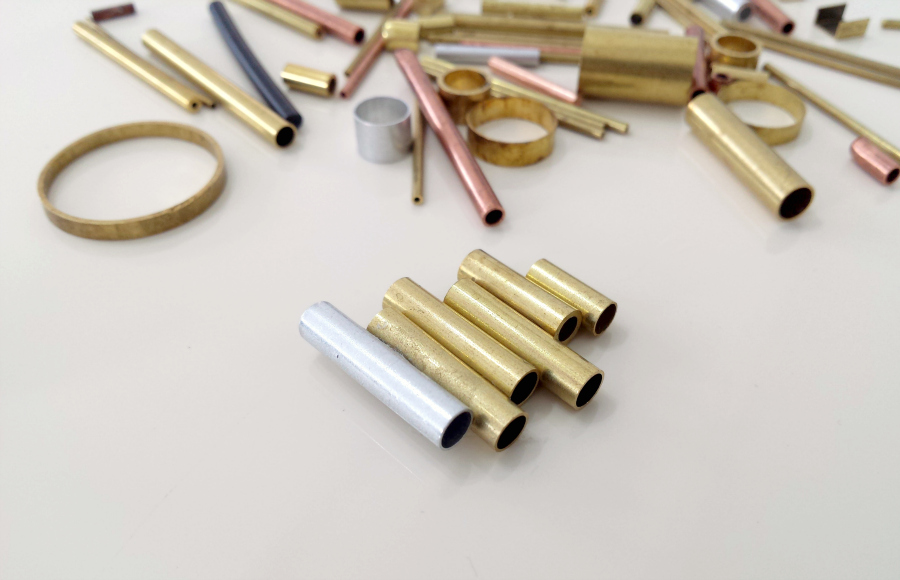
I played around with arranging them and settled on this staggered configuration…

DIY PENDANT FROM BRASS TUBING OFFCUTS

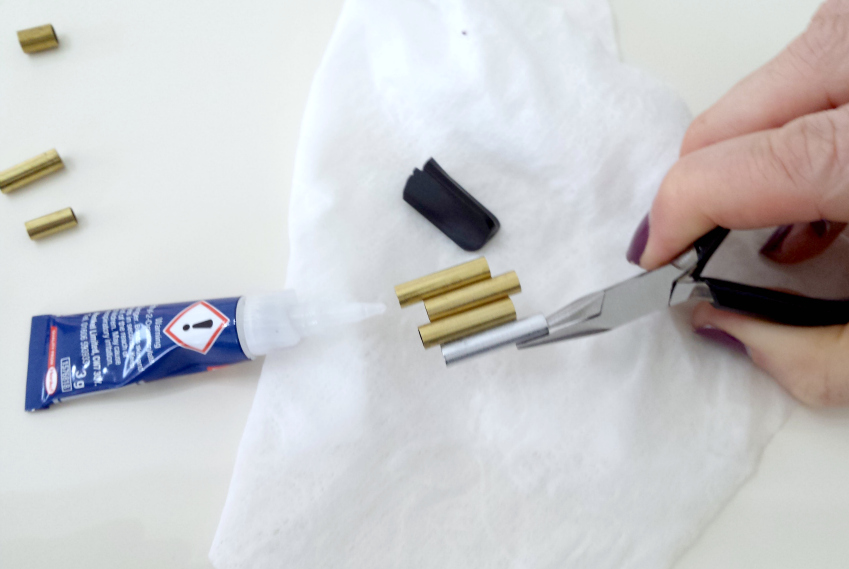
Then grasping one of the tubes with a set of small pliers…I simply super glued each tube in turn along the length, holding in place for about 30 seconds before moving onto the next….(be sure to use a glue suitable for metal)

DIY PENDANT FROM BRASS TUBING OFFCUTS

Leave to dry…

DIY PENDANT FROM BRASS TUBING OFFCUTS

Thread onto a piece of leather, rubber, or your favourite chain!

Doesn’t get easier than that, right?!

DIY, how to, jewelry, repurposing, Tutorials

DIY: Rubber & Brass Tube Necklace

11/10/15

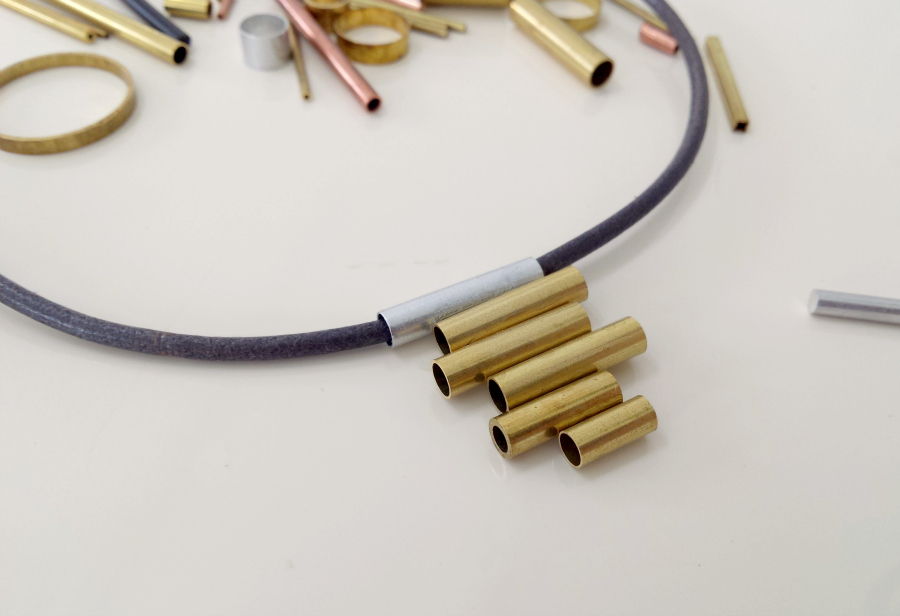
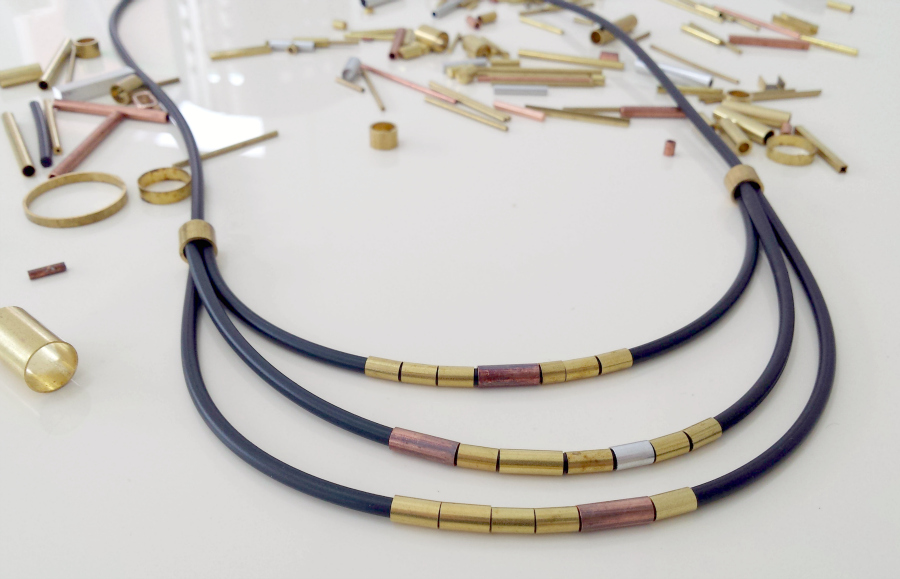
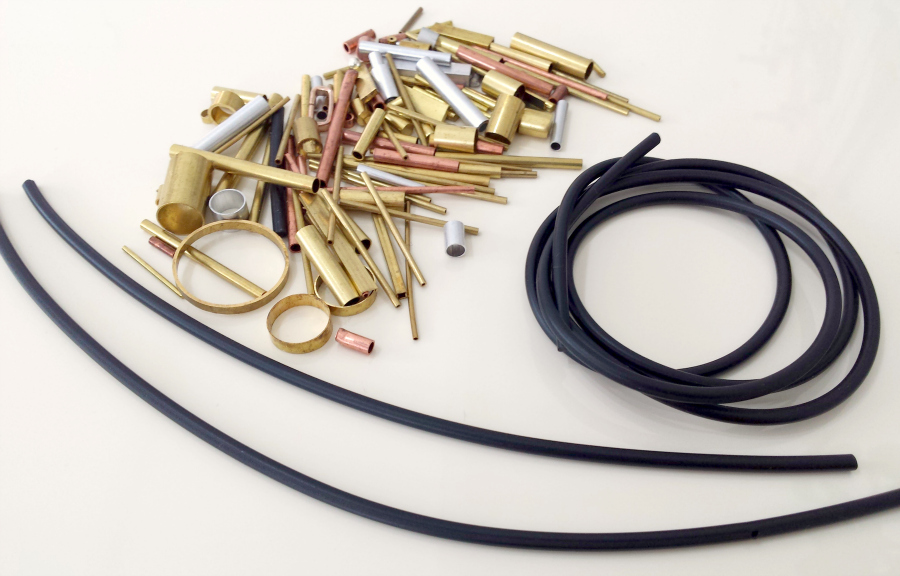
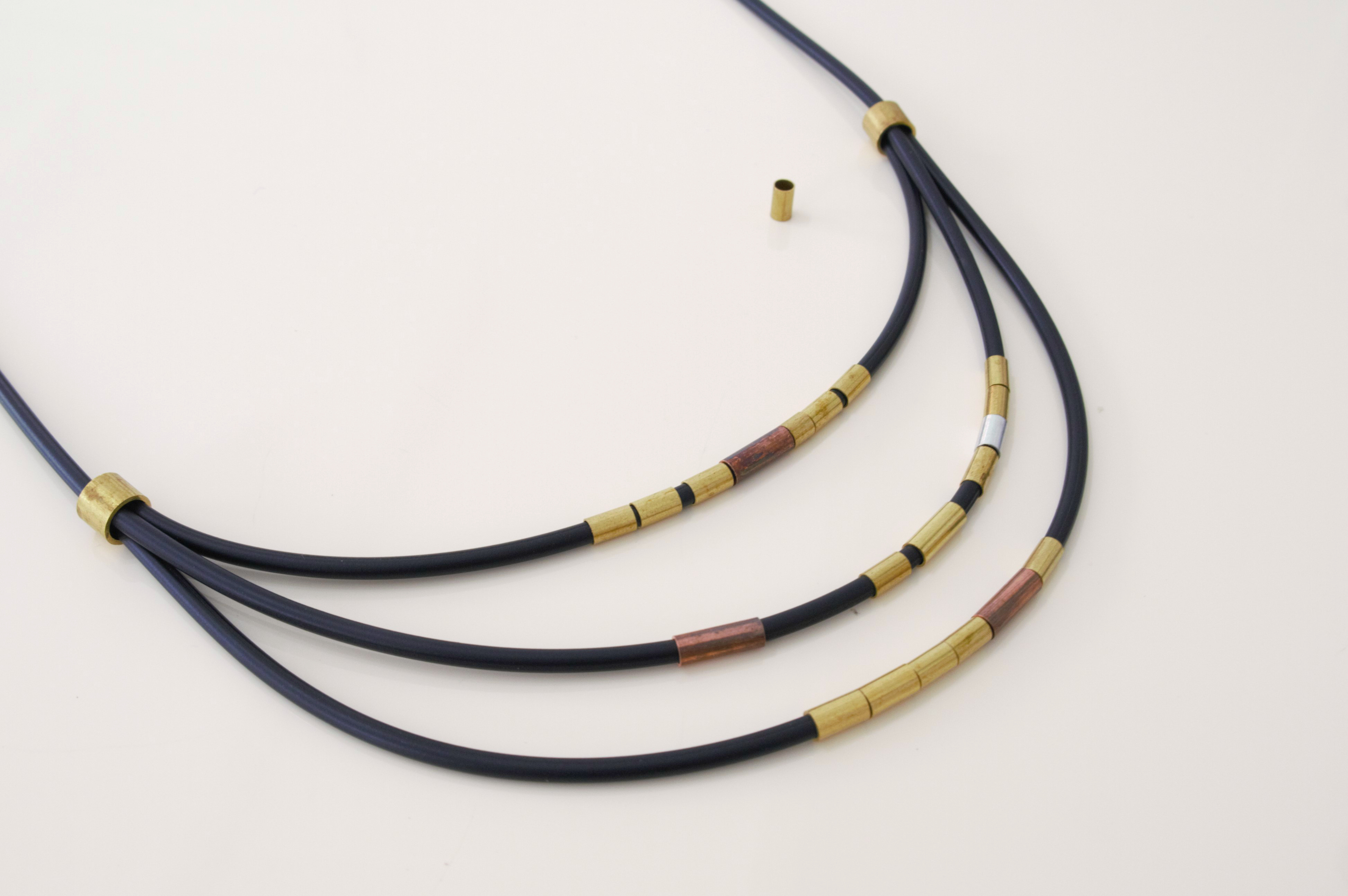
This is what happens when my weekend plans get messed up and I’m forced to stay home with nothing specific to do. I start playing with random materials to see what I can come up with. I love using materials for something other than their intended purpose. This necklace is comprised entirely of “stuff” more at home in the hardware shop. But I find the contrast between the metals and rubber really pleasing….DIY RUBBER AND METAL TUBE NECKLACE

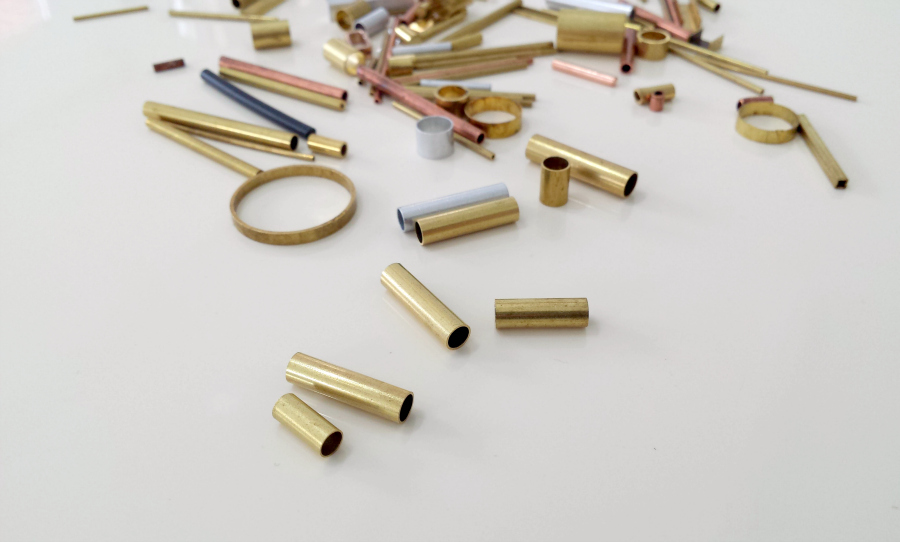
The metal elements of this necklace come from a mixed bag of tubing offcuts I randomly came across on Ebay a few months back. I was looking for something else entirely when I came across this bag of offcuts. I THINK they are used in precision engineering and things like model steam engines/trains etc. But in any case they looked mighty puuuuurty to me! So I bought them thinking I’d have a play and see what happened. The rubber cord is a length of this Nitrile O Ring cord which is used in oil/fuel/water seals for car and lawnmower engines. This one is the 3mm diameter cord but it comes in a variety of different thicknesses and you can buy it by the metre or in premade circles. All of which I am tempted to explore further for jewellery. But enough of my ponderings! Just look how easy this is to make….DIY RUBBER AND METAL TUBE NECKLACE

Cut 3 pieces of the rubber cord measuring approx 33″, 9″ and 7″

DIY RUBBER AND METAL TUBE NECKLACE

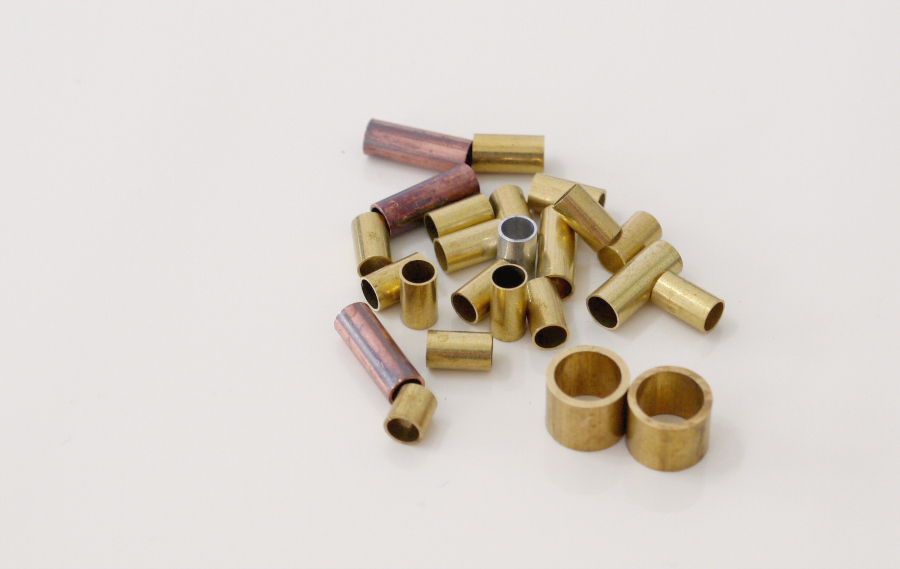
Seperate out the tubing offcuts that are the same diameter as the cord (these will be the “beads”) plus 2 larger pieces of tube that will snugly fit all 3 pieces of cord (these are used like cord “crimps” to hold the cords together).

DIY RUBBER AND METAL TUBE NECKLACE

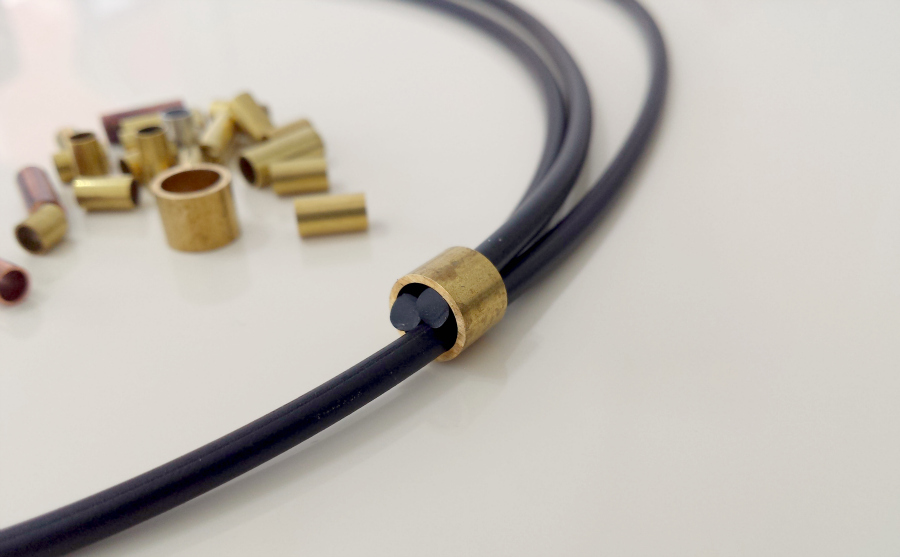
Take one of the larger pieces and thread all 3 lengths of rubber cord through it, with the longest piece extending out about 10″ and the ends of the 2 shorter lengths of cord flush with the top.

DIY RUBBER AND METAL TUBE NECKLACE

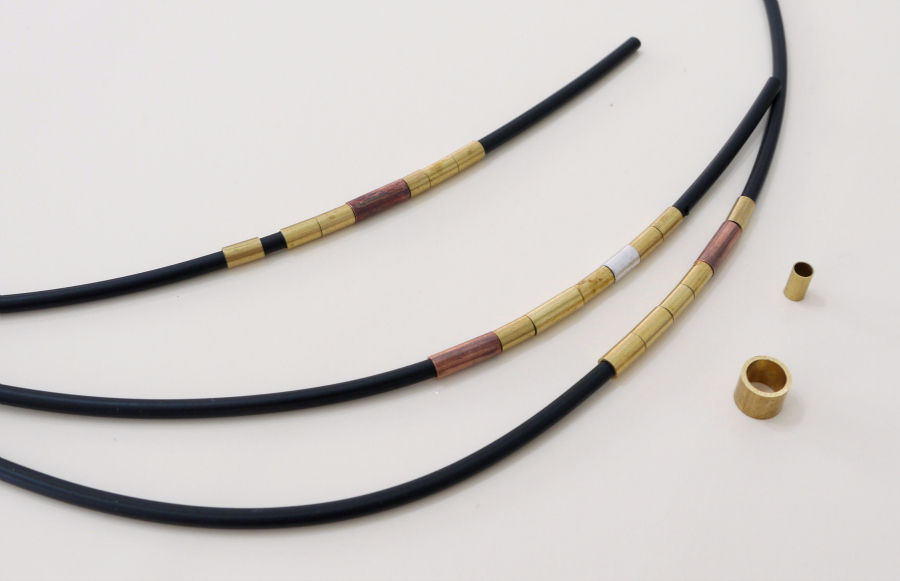
Thread  the “beads” onto all 3 of the rubber cords in whatever arrangement pleases you. I have a couple of copper and aluminium elements thrown in there too. Set one of the smaller pieces of metal tubing offcuts to one side.

DIY RUBBER AND METAL TUBE NECKLACE

Slide on the second larger metal tube to clamp it all together, just like you did the first.

DIY RUBBER AND METAL TUBE NECKLACE

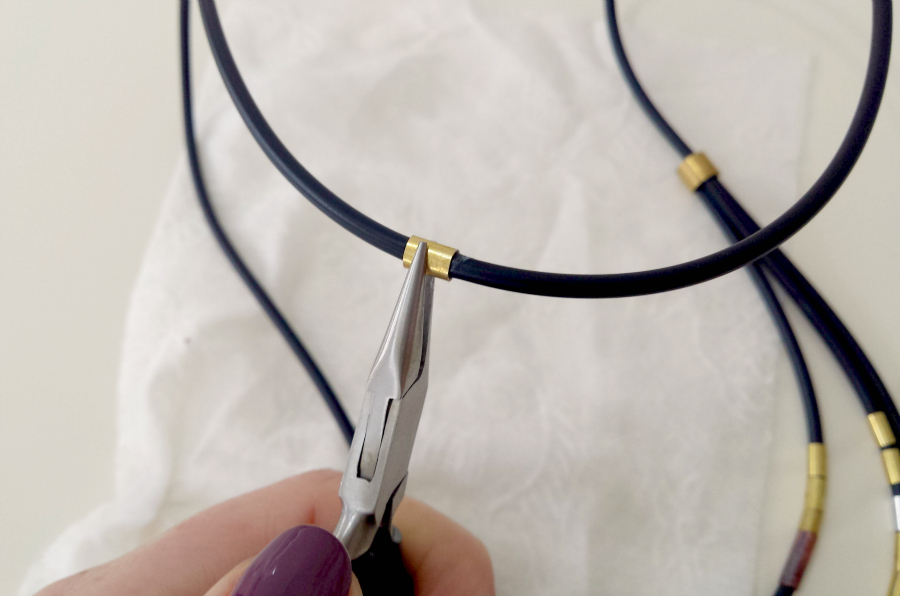
You’ll have the two cut ends of the longer length of cord left to join together. Slide that smaller bit of tube on one end. Join the cut ends of the rubber with a dab of super glue and hold in place for a few seconds. While the glue is still tacky, slide the tube offcut over to hide the join and crimp slightly with a pair of pliers.

DIY RUBBER AND METAL TUBE NECKLACE

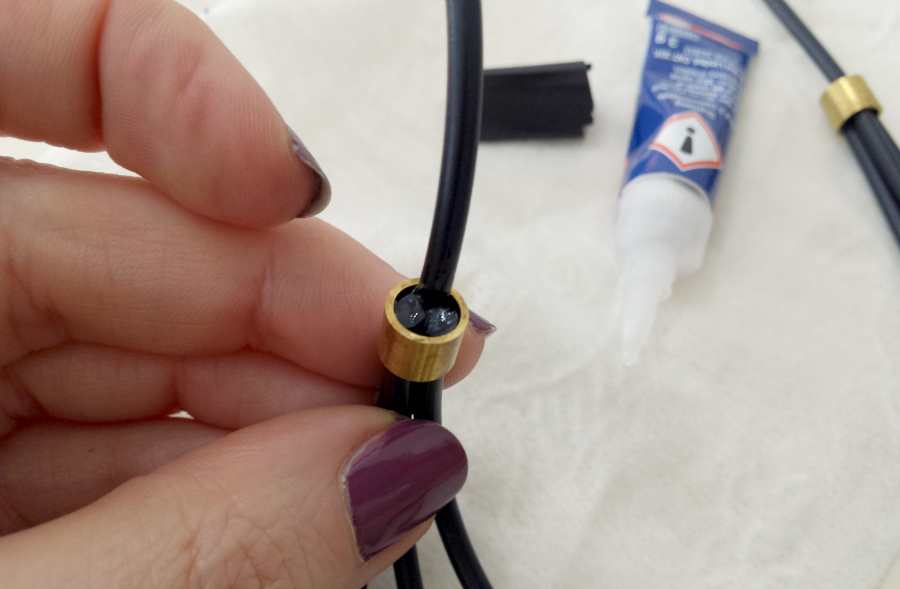
Pop a few dabs of superglue into the top of the larger metal tubes where the rubber cords all meet too. Just to give an extra bit of hold. Quickly wipe away any excess that may drip through onto the cords below.

DIY RUBBER AND METAL TUBE NECKLACE

Leave to dry and you’re done!

DIY RUBBER AND METAL TUBE NECKLACE

I’m really rather taken with it.  I don’t think it’s obvious at all that these are hardware/engineering materials and the whole thing has a contemporary and minimalist feel with clean, simple lines. And I love the textures and subtle metallic elements.  Awesome with some simple black evening wear or over a plain collared shirt right?


DIY, how to, refashioning, Restyles, Sewing, Thrifting, Tutorials

Refashion: The Wonky Top

11/02/15

So, yeah! This is a top that on paper…shouldn’t work…but absolutely does! It’s made from this thrifted crepe jersey skirt and was a bit of an experiment that kinda really worked out!THE WONKY TOP SKIRT TO TOP REFASHION - TUTORIAL

The skirt itself is a quarter circle construction so everything is kinda on the bias. The resulting top therefore drapes in a really interesting way. The side seams are not actually horizontal but twist slightly around the body and it drapes differently on one side than it does on the other. Hence the “wonky” moniker! But hey…if Levi can get away with twisted denim…I think I can call it a design element on this top right??THE WONKY TOP SKIRT TO TOP REFASHION - TUTORIAL

You can see in the images above the difference in drape. It’s fairly standard on the left (middle pic). But the circle element is really apparent on the right; giving the whole thing a really interesting asymmetric feel.

The skirt was really simply made…THE WONKY TOP SKIRT TO TOP REFASHION - TUTORIAL

You can just about see in this pic how the grain runs on the diagonal…it’s a relatively heavy weight crepe jersey…THE WONKY TOP SKIRT TO TOP REFASHION - TUTORIAL

VERY simple steps in this refashion. I wanted to retain the original curved hem. So I folded the top portion over…THE WONKY TOP SKIRT TO TOP REFASHION - TUTORIAL

Then cut along the fold. This will become my neckline for the top…THE WONKY TOP SKIRT TO TOP REFASHION - TUTORIAL

I sloped the shoulders and cut out a neckline curve…THE WONKY TOP SKIRT TO TOP REFASHION - TUTORIAL

After sewing along the shoulders I lined up the side seams and cut out a short kimono sleeve and curved that into a new side seam…THE WONKY TOP SKIRT TO TOP REFASHION - TUTORIAL

Worth noting that the armhole is still sealed at this stage as that was the original side seam…so that had to be trimmed off to open up the armhole/sleeve…THE WONKY TOP SKIRT TO TOP REFASHION - TUTORIAL

After that I just sewed up the side seams (plain ole narrow zig zag on a standard machine with jersey needles). The hem was already finished so all that was left after that was to turn and stitch a simple narrow hem on the sleeves and neckline and that was it!THE WONKY TOP SKIRT TO TOP REFASHION - TUTORIAL

This was one of those makes that took no time at all and worked out even better than I had envisaged. Don’t you just love it when the sewing gods smile on you like that?

Newer Posts
Older Posts
Portia
Follow
Sewbox

© Copyright 2026. Portia Lawrie. All Rights Reserved. Managed by WordPress Web Dev Cornwall .